How to Add Charm to a New House (Lessons From a 115-Year-Old Home)
5-minute read
You got the keys, you walked in, and you looked around at the builder-beige walls and the flush-mount lights and thought, "Okay, now what?"
The quickest way to add charm to a new house is to add layers that feel like they've been there a while. Mix vintage furniture with your new pieces, swap builder-grade lights and hardware for vintage or vintage-style ones, and when you're ready for a project, add trim and millwork like wainscoting, picture frame molding, and built-ins that look like furniture.
I'm Hope, a Baton Rouge REALTOR® and the wallpaper designer behind byHopeatHome. I recently toured a 150-year-old historic home here in Baton Rouge, and it was a masterclass in charm.
Here's what a house like that can teach any home, new build included.
House Tour | One of Baton Rouge’s oldest homes
Less of a tour and more me just obsessing over the charm. I’d expand the kitchen into the side yard and connect it to open up to a sunroom on the porch. I’d give some of these spaces a little TLC (and wallpaper) and leave others exactly how they are. Watch the walkthrough →
@homewithhope225

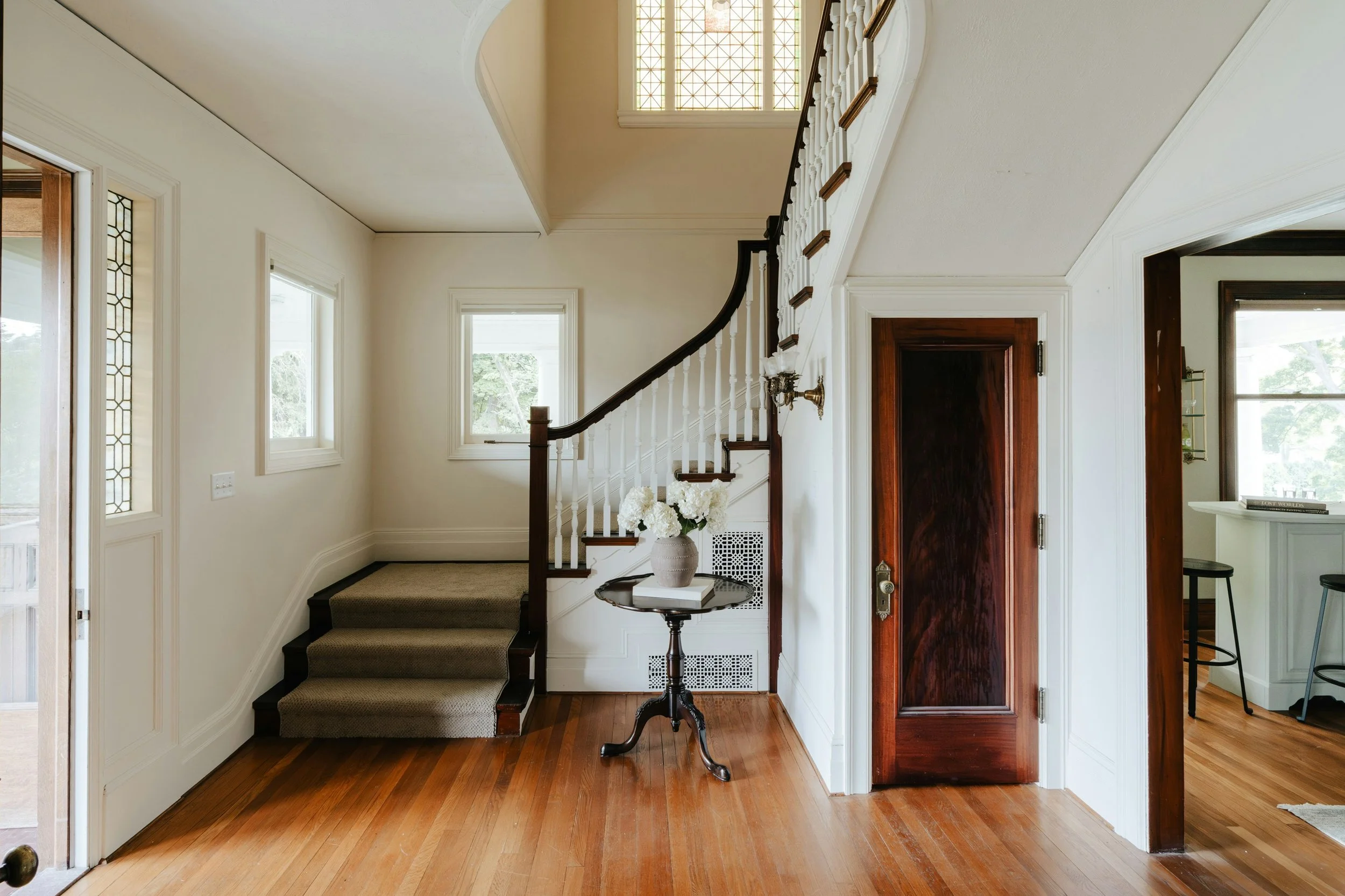
What makes an old house feel charming?
In a word: layers. Old houses have trim around every door and window, millwork on the walls, and furniture collected over generations. Nothing matches perfectly, and that's the point.
New houses are usually the opposite: flat walls, thin trim, and everything bought at once. The goal isn't to fake age. It's to add layers, one at a time, until the house feels collected instead of furnished.
Easy ways to add charm this weekend
No contractor needed. These are low-cost, easy to undo, and you'll notice them every day.
Mix old and new furniture
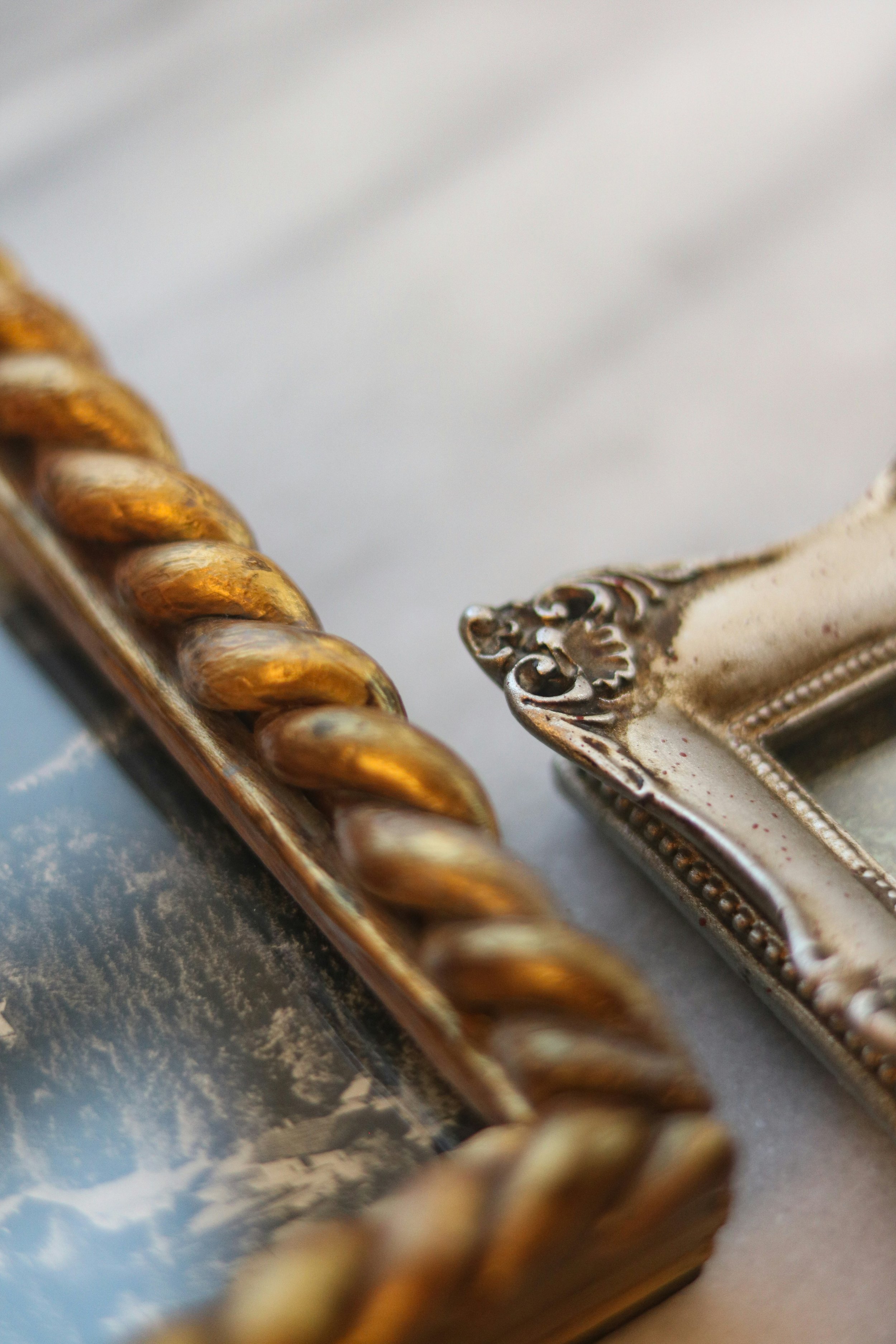
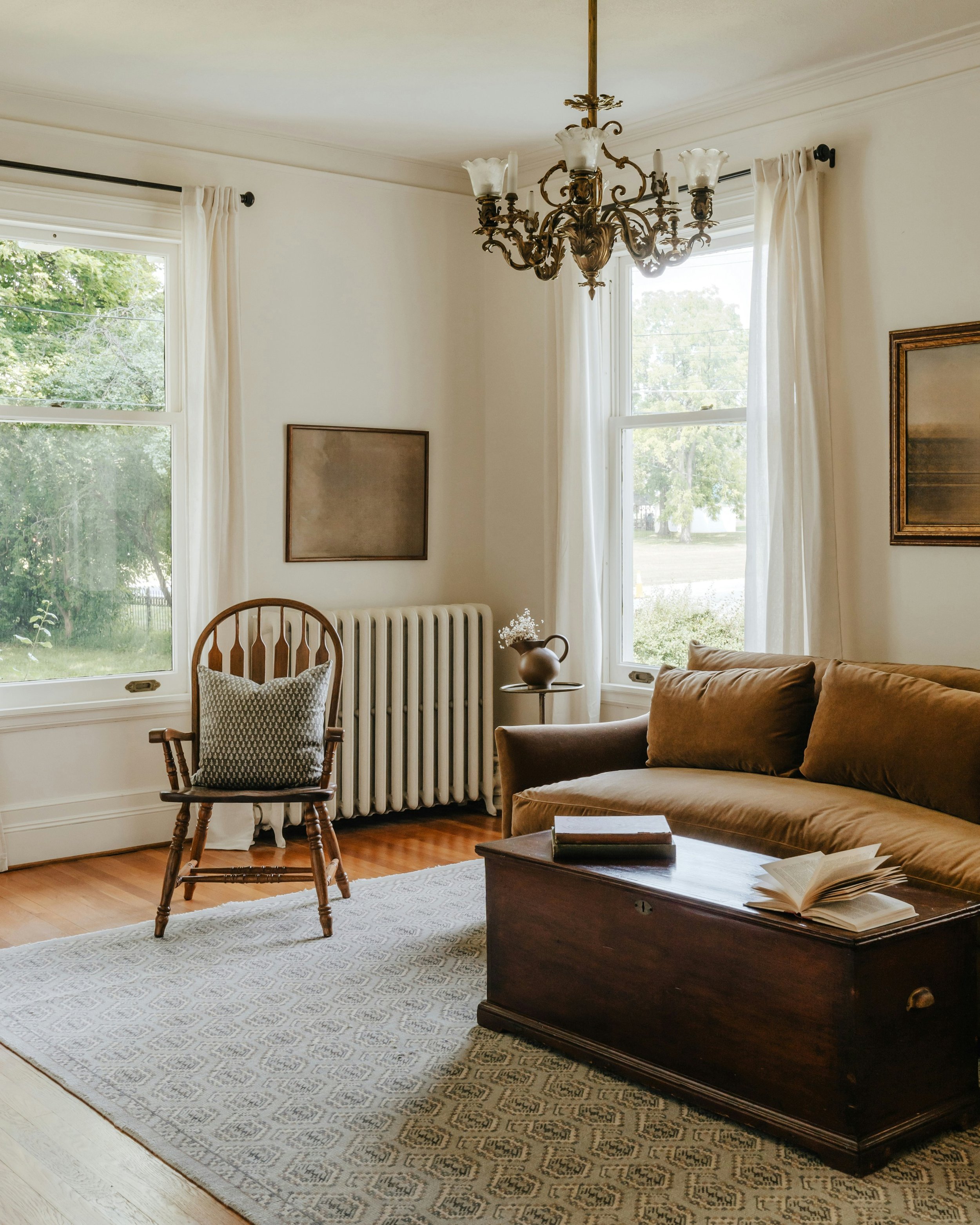
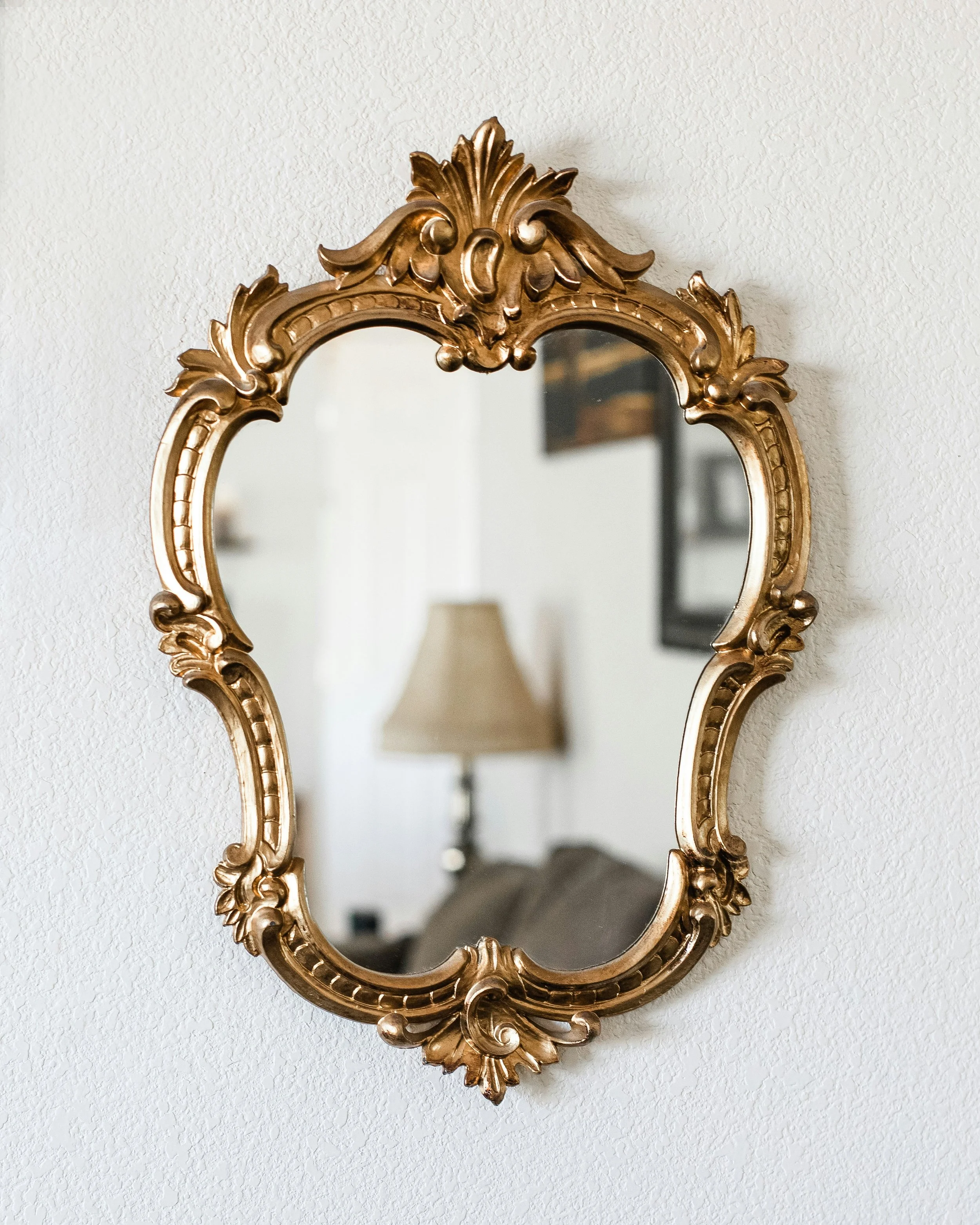
This is the single biggest charm move, and it costs less than buying new. Pair your new sofa with an antique blanket chest as a coffee table, or tuck a vintage Windsor chair into a corner. Aim for one piece with some age on it in every room: a chest, a side chair, a dresser, a mirror. Estate sales, antique malls, and Facebook Marketplace are full of them.
[Photo: living room with brass chandelier, Windsor chair, blanket chest, and velvet sofa. Alt text: "Living room mixing a new velvet sofa with an antique blanket chest coffee table and vintage Windsor chair."]
Swap in a vintage light fixture
A schoolhouse sconce, a brass chandelier, or an iron lantern does more for a room than almost any piece of furniture. Look for true vintage, or new fixtures in aged brass, milk glass, and iron. Start with the spots guests see first: the entry, the dining table, and the powder room.
Change the hardware
Unlacquered brass pulls, glass door knobs, and old-fashioned cabinet latches make builder-grade cabinets look custom. It's a weekend project with a screwdriver.
Hang a vintage mirror or art
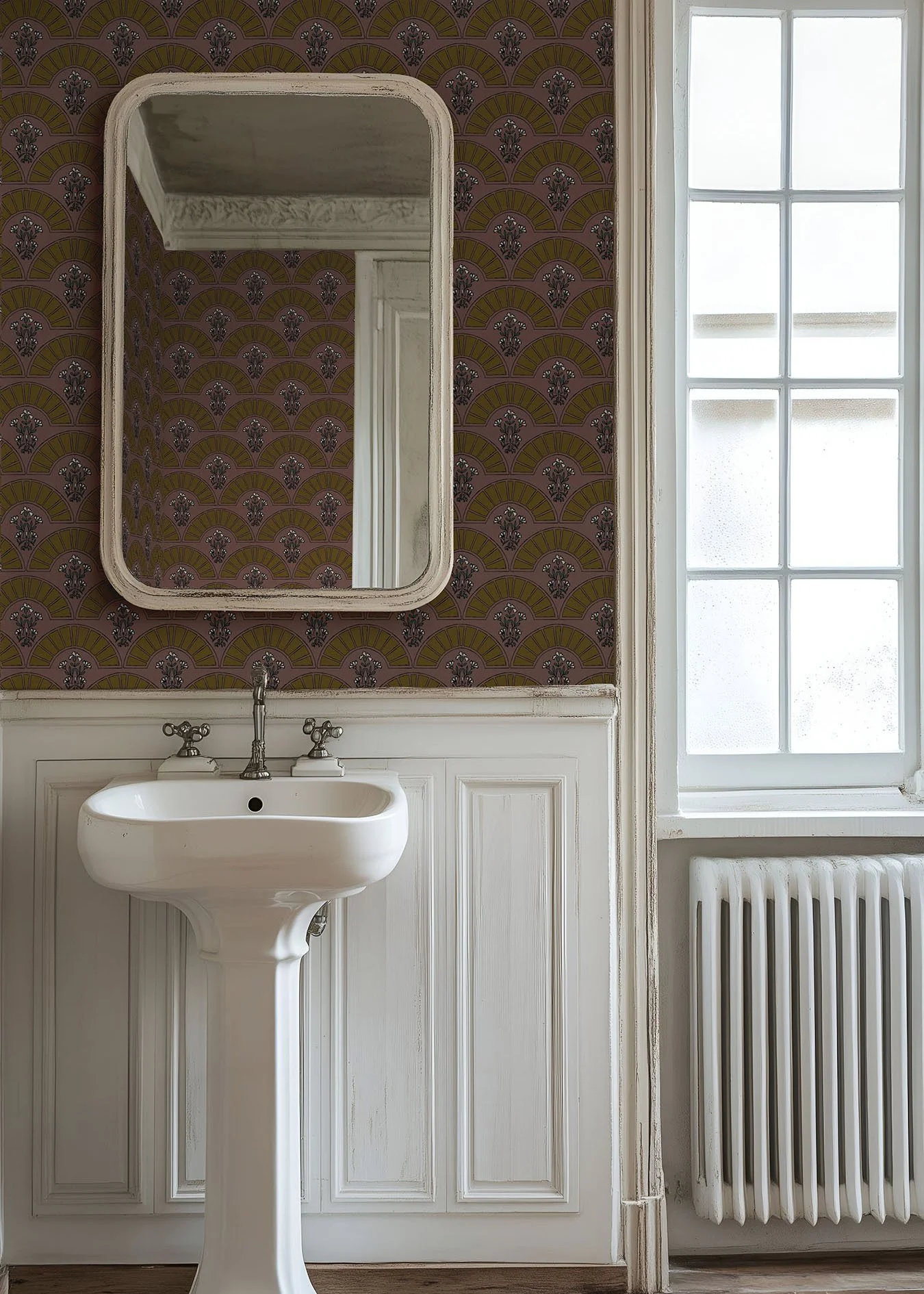
An old wood-framed mirror over a brand-new sink is a perfect example of mixing. One vintage piece makes the new fixtures around it feel collected.
Hang curtains high and wide
Mount the rod close to the ceiling and a few inches past the window frame on each side. The windows look bigger, the ceilings look taller, and the room feels like an old house with tall windows.
Wallpaper: the bridge between easy and custom
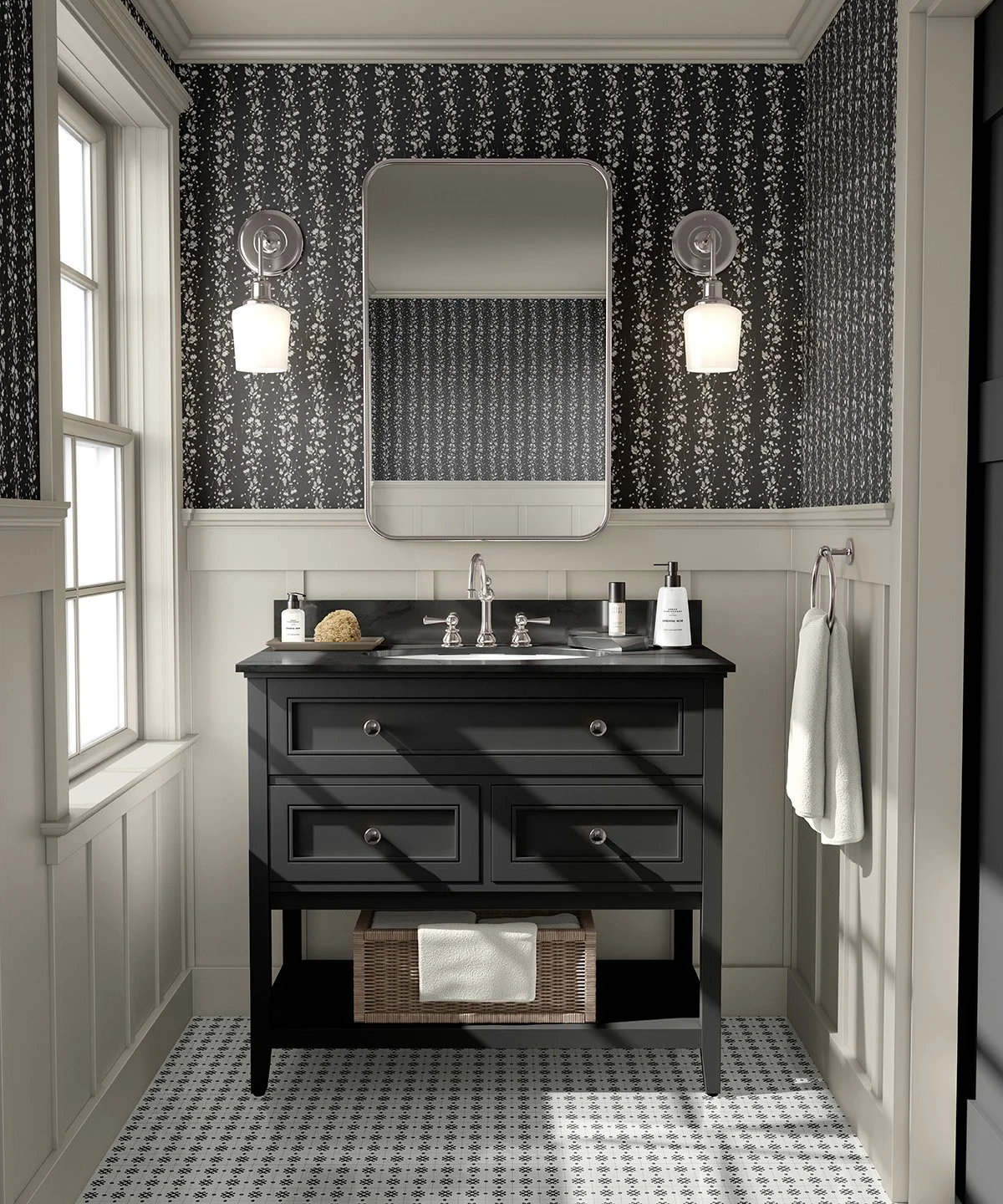
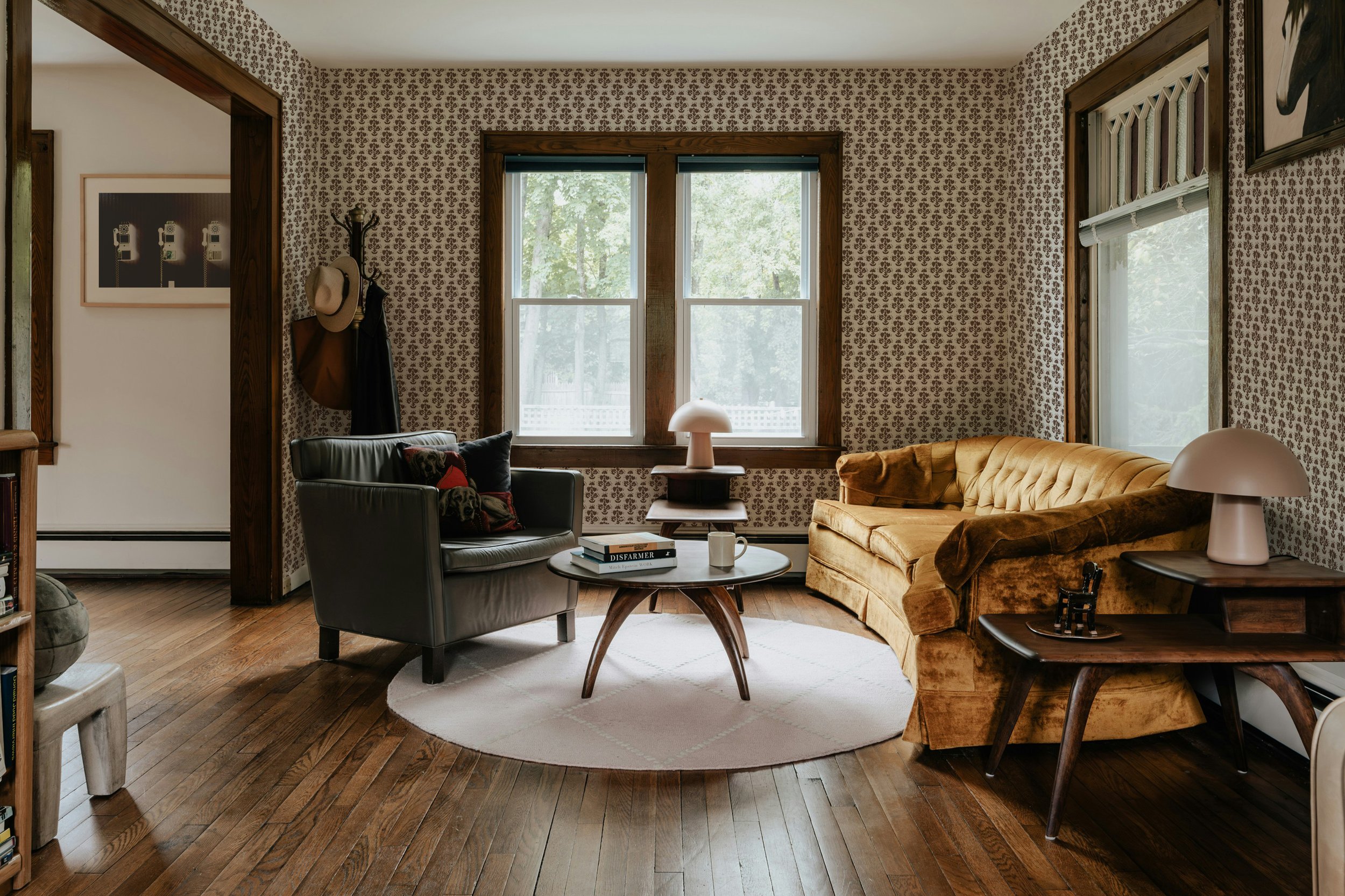
Old houses were wallpapered top to bottom, and that's where so much of their personality lived. Wallpaper is more than a weekend swap but much less than carpentry, which makes it the perfect next step. Start small in a room that makes a big impression: a powder room, a laundry room, or the back of a bookcase.
Am I a bit biased since I have my own line of wallpaper? Of course. Does my point still stand? Yes.

Bigger projects worth planning for
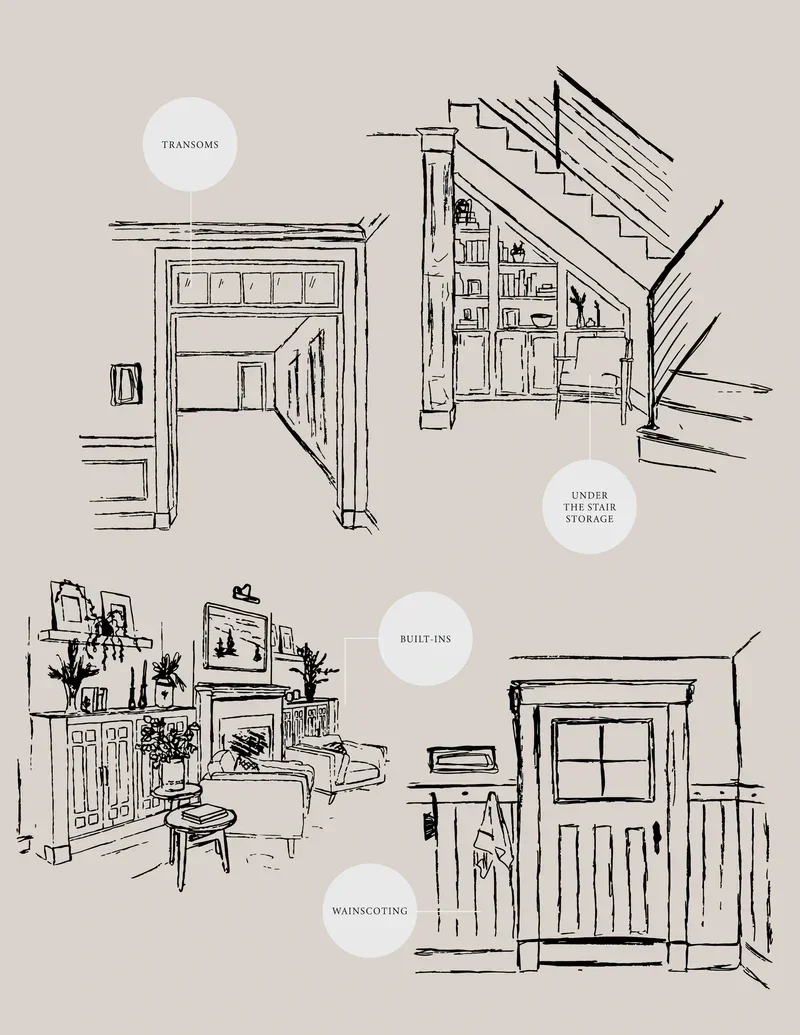
Trim and millwork are where old houses really get their character. These take a carpenter (or a confident DIYer), so live in the house for a season first and learn how you use each room.
Wainscoting
Wainscoting is paneling on the lower part of a wall, usually topped with a chair rail. Beadboard, board-and-batten, and raised panel are the most common styles. It adds instant structure to plain drywall and holds up well to kids and scuffs. Try it in a dining room, entry, stairwell, or bathroom.
Picture frame molding
These are thin rectangles of trim applied to a bare wall and painted the same color as the wall. It's one of the most affordable ways to make a builder-grade room look custom, and it works especially well in living rooms, bedrooms, and along a staircase.
Thicker trim and crown molding
Wide door and window casings, tall baseboards, and crown molding are the details that make a room feel finished. If you replace only one thing, start with the casings around the doors and windows you see most.
Built-ins that look like furniture
The best built-ins don't look like a cabinet nailed to the wall. They have trim, feet, glass doors, and old-fashioned hardware, so they look like they've always been part of the house. Think a hutch in the dining room, a window seat, or bookcases on either side of a fireplace. Ask your carpenter for furniture-style details, and the piece will look custom instead of builder-grade.
Which charm upgrades add resale value?
Selling is probably the last thing on your mind, but every change you make now is something the next buyer will see, too. As a REALTOR®, here's how I sort them:
Adds value: Quality trim and millwork, well-made built-ins, updated light fixtures and hardware, and good window treatments are all great choices. Buyers read these as "well cared for."
Pure joy (and that's fine): A bold wallpaper, a moody paint color, a gallery wall bring you ROI for the time you’re in your home. These are for you. Put them in rooms that are easy to refresh later, and enjoy them. A professionally designed home will still appeal to the masses.
Think twice: If a finish is all over Instagram this year, it will date your house in five. For anything permanent, look to architectural history instead. Ask what a house of your home’s style would have had, then choose that. Classic details like wainscoting, simple casings, and timeless tile selections have lasted a century for a reason, and buyers still pay for them.
Vintage furniture, mirrors, and lighting have a bonus: they move with you.

PS: NEW HERE?
I’m Hope Johnson, Baton Rouge Realtor, designer, and wallpaper enthusiast who thinks knowing the numbers and having vision aren’t mutually exclusive.
If you’re not already on my newsletter list (not just for buyers and sellers), come join.